The Politics of Performance: Why Public Trust Crumbles When Emotion Looks Staged
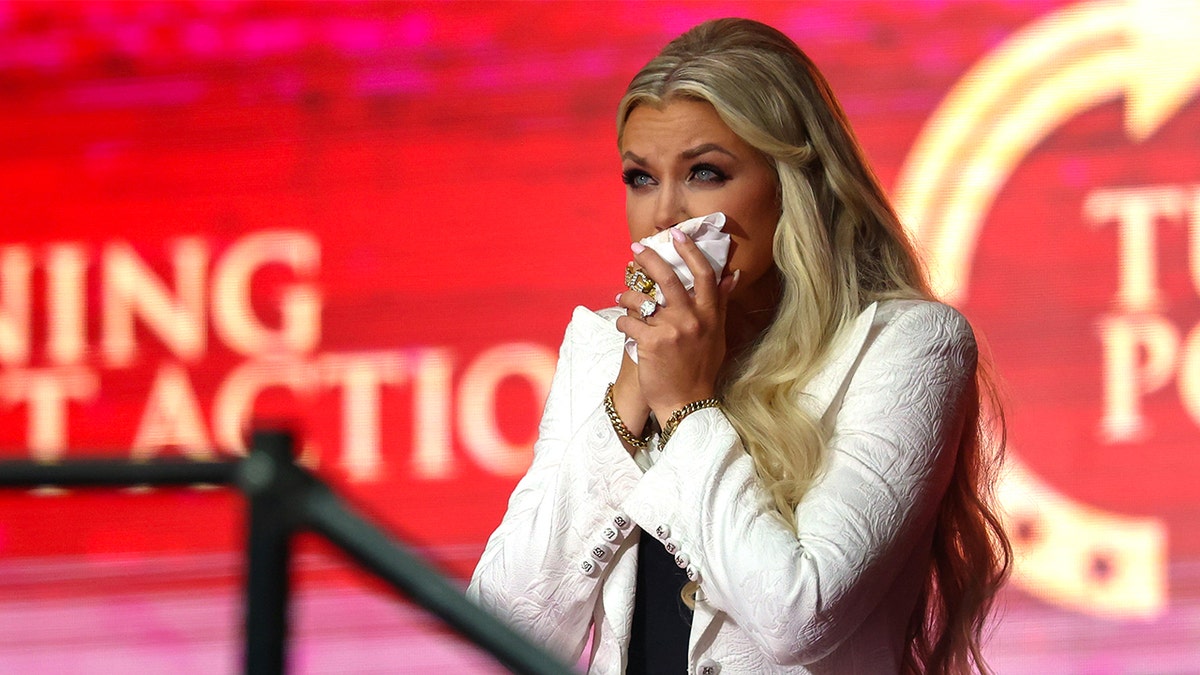
In an age when every speech is streamed, every gesture dissected, and every public figure appears under a magnifying glass, Americans are increasingly questioning whether the emotions displayed on camera are genuine—or carefully curated performances.
The debate reignited this week after a public appearance by a high-profile figure triggered a wave of commentary suggesting her tearful moment was more theatrical than sincere. Viewers remarked on everything from her wardrobe to her mannerisms, her staging choices, and the emotional cues she relied on throughout the televised segment.
While such reactions are hardly new in political culture, the intensity of the public response reveals something deeper: Americans are increasingly wary of emotional displays that seem rehearsed rather than heartfelt. The moment has become a case study in the widening gap between public presentation and public perception.
A Carefully Crafted Image—or an Honest Moment?
During the appearance in question, the speaker sat before the cameras wearing a lace-patterned outfit, her hair styled in a way some viewers associated with older traditions of televised religious programming. A Bible rested on her lap. A tissue remained in her hand throughout the segment.
To supporters, these were markers of sincerity—symbols of faith, vulnerability, and earnest emotional investment in the topic at hand.
To critics, they were props in a performance designed to evoke sympathy.
“She was communicating in symbols before she ever spoke a word,” said Dr. Rebecca Turner, a professor of communication who studies political staging. “Wardrobe, objects, gestures—these all become part of the narrative. Whether they’re intentional or not, viewers interpret them.”
The debate raises important questions:
When does emotional expression become political theater?
Are public figures responsible for the way their presentations are interpreted?
And how do these perceptions influence trust?
Why Viewers React So Strongly to Perceived Inauthenticity
Public skepticism toward staged emotion is hardly new. Generations of Americans have watched political leaders tear up, clasp hands, whisper prayers, or pause dramatically for effect.
But today’s media environment amplifies scrutiny to an unprecedented degree.
“People are more media-literate than ever,” said Turner. “They can spot when something feels formulaic—when the lighting, the posture, the tears, and the timing all align too perfectly.”
For many viewers, the visual cues overshadowed the actual message. Some questioned whether the emotions were genuine or orchestrated to sway public opinion.
Sociologists argue that this reaction is part of a broader trend: Americans are navigating an era of heightened distrust, not just toward political institutions but toward any form of public communication.
“Authenticity is the most valuable commodity in public life right now,” said Dr. Michael Leland, a sociologist who studies political trust. “When people feel they’re being manipulated emotionally, even unintentionally, they reject the message entirely.”
The Symbolism of Tears in Modern Politics

Crying in public life has historically been a double-edged sword. A century ago, overt displays of emotion from political figures—especially women—were dismissed as weakness. Today, the reaction can swing in the opposite direction, with some audiences welcoming vulnerability while others question its sincerity.
A public figure wiping their eyes may hope to communicate:
empathy
spiritual grounding
personal conviction
grief
moral seriousness
But depending on presentation, the same gesture can be interpreted as:
theatricality
strategic vulnerability
emotional manipulation
distraction from substantive issues
“It’s not the tears themselves,” said Leland. “It’s the timing, the setting, the repetition. Viewers begin to sense patterns, and once a gesture becomes associated with performance, it’s difficult to shake that perception.”
The Role of Visual Presentation in Shaping Public Opinion
Wardrobe, props, and carefully arranged settings have long been components of public communication. Candidates stand in front of factories to signal commitment to workers. Officials speak from churches to emphasize faith. Leaders appear with their families to highlight values.
But when these elements accumulate with too much precision, viewers begin to sense choreography rather than authenticity.
Consider the components that drew the public’s attention in this case:
The lace outfit
The striking hairstyle
The prominent placement of a religious text
The tissue, visible throughout the segment
The lighting and camera angles emphasizing emotional expression
Individually, none of these elements are unusual. Together, some viewers interpreted them as overproduced.
“People know the difference between spontaneous emotion and staged emotion,” Turner said. “Or at least, they believe they do—and that belief shapes their reaction.”
Why the Public Demands Authenticity Now More Than Ever

Analysts point to several cultural forces behind the heightened sensitivity to perceived performance:
1. Oversaturation of Emotional Media
From reality television to viral videos, viewers consume emotional content constantly. They’ve become adept at recognizing the “beats” of scripted emotion.
2. Political Messaging Fatigue
After years of emotionally charged campaigns, Americans are exhausted by dramatic appeals. Many crave plainspoken truth delivered without spectacle.
3. Social Media Dissection
Clips are slowed down, freeze-framed, and analyzed in micro-detail. Every blink becomes a talking point.
4. A Trust Crisis Across Institutions
When trust is fragile, even small gestures trigger suspicion.
“People aren’t just questioning one televised moment,” Leland noted. “They’re expressing accumulated frustration with being spoken to in ways that feel engineered rather than honest.”
The Double Standard: Why Women in Public Life Face Sharper Scrutiny
Though both men and women face criticism for perceived theatricality, female public figures often encounter a more intense form of commentary focused on:
appearance
emotional expression
hairstyle
posture
clothing choices
The incident highlights how gendered expectations shape reactions.
“When a man cries on television, he’s often praised for vulnerability,” Turner said. “When a woman cries, she runs the risk of being perceived as overly dramatic—or worse, calculating.”
This double standard complicates how emotional authenticity is judged.
Supporters See Strength; Critics See Stagecraft
While critics questioned the sincerity of the public figure’s appearance, supporters saw something entirely different: a person showing emotional courage, grounded in faith, expressing the weight of the moment.
What looks like a performance to one group may look like conviction to another.
This divide underscores a deeper truth:
Americans increasingly interpret the same images through vastly different lenses shaped by personal experience, political identity, and cultural values.
“There’s no longer a shared baseline of interpretation,” said Leland. “Two people can watch the exact same five minutes and walk away with opposite conclusions.”
Why Moments Like This Matter in National Discourse
Emotional communication isn’t inherently bad. Many great leaders—historic and contemporary—have connected powerfully with their audiences through moments of candor, vulnerability, or deep feeling.
The challenge arises when the line between authentic emotion and polished performance becomes blurred.
When that happens:
messages lose impact
audiences disengage
public trust erodes
polarization deepens
genuine emotional expression becomes harder to recognize
In a democracy, where persuasion depends on mutual trust, this erosion has real implications.
“Public life requires authenticity,” Turner emphasized. “Not perfection, but honesty. When viewers sense a gap between presentation and truth, they pull back.”
A Broader Lesson for Public Figures Everywhere
Whether the public figure in this case intended to be theatrical or was simply expressing genuine feeling, the reaction offers important lessons for anyone communicating on the national stage:
Authenticity cannot be manufactured.
Emotional moments must match the gravity of the message.
Props and staging should complement—never overshadow—the content.
Repetition makes gestures feel rehearsed, even when genuine.
Audiences judge sincerity instinctively, not analytically.
As political communication becomes more performative across the board, the demand for authenticity grows louder.
Conclusion: The Stage Is Bigger Than One Person
This moment was never just about one appearance, one outfit, or one emotional display. It was about something larger—a public increasingly skeptical of political performance, eager for straightforward truth, and aware of how presentation shapes messaging.
The challenge for public figures moving forward will be walking a delicate line between emotional accessibility and perceived theatricality. The public does not mind emotion; it minds artifice. It does not resist sincerity; it resists staging.
And as the debate continues, one thing is clear:
In modern politics, authenticity is not just desirable.
It is the currency of trust—and the audience knows when it’s being asked to believe in a performance.