Senator John Kennedy’s entrance into the packed oversight hearing felt less like a routine political moment and more like the opening frame of a courtroom thriller where the audience does not yet realize the truth about to be unleashed.
He walked slowly, unguarded, carrying no polished binder or advisor-approved dossier, but instead clutching an unremarkable stack of printer paper that immediately unsettled everyone who noticed the faded ink marks along its jagged edges.
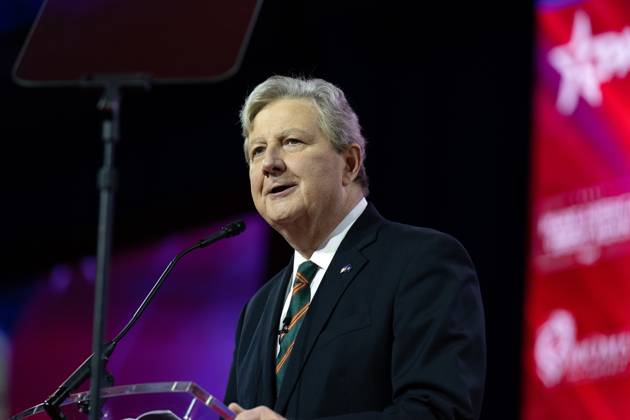
The room expected Kennedy to deliver his usual blend of barbed wit and precise questioning, yet something in his expression hinted at a deeper intention that even his closest allies seemed unprepared to comprehend in real time.
As he approached the microphone, he adjusted it a single time with a deliberate steadiness that suggested both confidence and controlled fury, the kind that only appears when someone has decided to break the script entirely.
Then, in a voice devoid of theatrics yet humming with quiet power, he uttered three words that immediately severed the air between him and the stunned chamber filled with staffers, cameras, and political adversaries.
“I will read,” he said, and the simplicity of the statement was so unnerving that several members instinctively leaned forward as though bracing for a detonation they could not yet see.
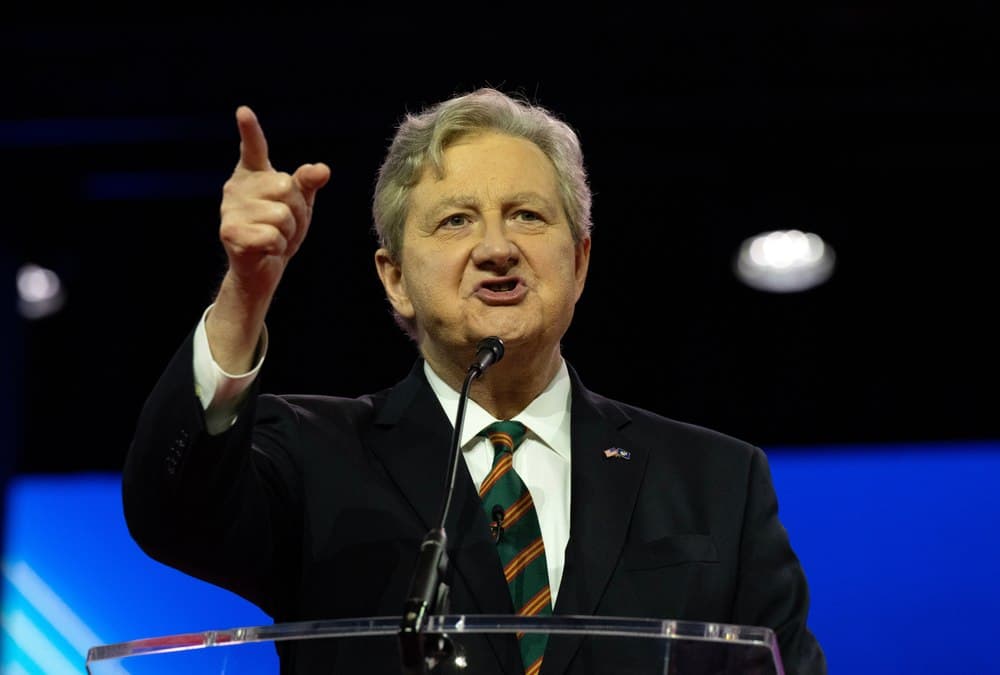
At first, no one recognized what he held, because no one believed he would dare bring something so raw, unedited, and politically volatile into a setting designed for sterilized speeches and controlled exchanges.
But the clarity arrived with the first echo of Representative Alexandria Ocasio-Cortez’s own tweet as it rang across the hearing room, sharp and undeniable, amplified by Kennedy’s unshaken delivery and the stunned silence that followed.
Then came the second tweet, carrying more bite than many remembered, then the third, then the fourth, and gradually the chamber filled with a tension so thick it felt like a pressure system collapsing inward.
AOC’s face shifted in real time, attempting composure, attempting poise, but unable to entirely conceal the tightening of her jaw as her digital statements were resurrected one by one in a space she absolutely could not control.
Kennedy continued reading with no inflection, no commentary, no dramatic pauses, allowing her own words to grow heavier with each passing sentence until even her supporters began glancing at each other with rising unease.
By the seventh tweet, something in the energy of the room transformed, replacing casual murmurs with a suffocating stillness so total that reporters stopped typing mid-sentence and aides froze in place as though hypnotized.
No one whispered anymore, no one scrolled through their devices, and no one dared laugh, because Kennedy’s cadence had become the rhythmic soundtrack of a scandal revealing itself without anyone knowing where it would land.
AOC shifted again, crossing her arms tightly as though bracing against a storm she failed to anticipate, the same storm now shaping itself from fragments of rhetoric she once believed were safely buried beneath digital noise.
Kennedy lowered the final sheet, inhaled once through his nose, then looked straight at AOC with an expression so sober it felt like the emotional climax of a courtroom drama crafted specifically to expose moral contradictions.
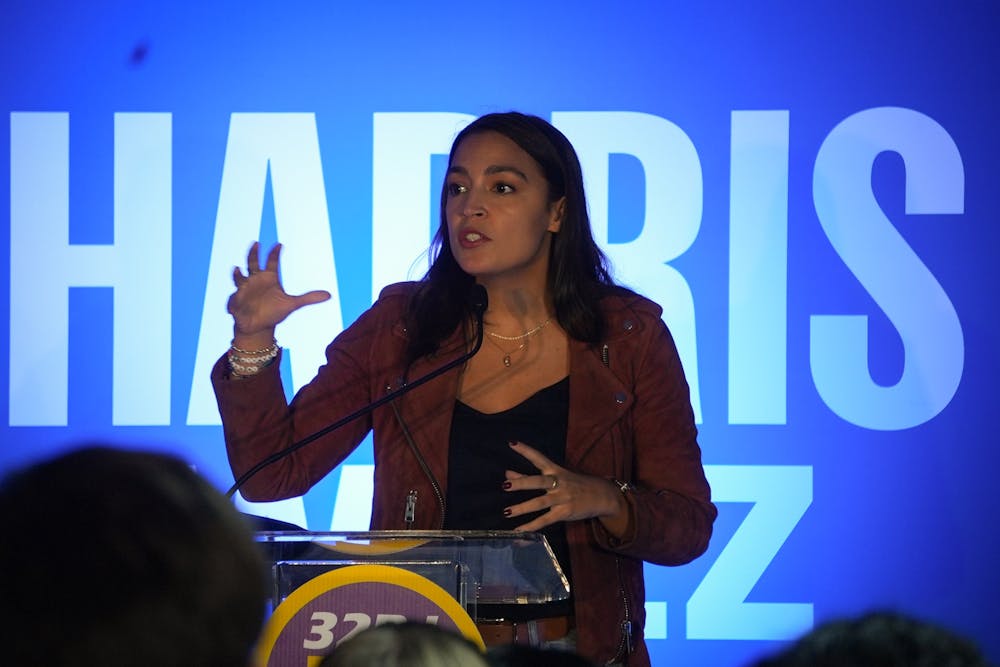
Then he delivered the question that detonated everything: “Is this a testament to democracy… or to fear?”
The shockwave of the question spread through the chamber instantly, collapsing whatever distance remained between personal politics and public accountability, turning the hearing into a national flashpoint within a single breath.
AOC froze, her lips parting slightly as though forming an answer, but she hesitated long enough for the cameras to transform her silence into a narrative far more powerful than any rebuttal she could muster.
Kennedy did not fill the silence, did not clarify his meaning, did not gloat, because he knew the question itself would circle the internet within minutes and ignite debates far beyond congressional walls.
Reporters later described the moment as “a political earthquake disguised as a reading exercise,” a spectacle that transcended normal hearings and mutated into something that forced both sides to confront uncomfortable truths.
Commentators immediately began speculating whether Kennedy had prepared this moment for months or whether it had been triggered by AOC’s recent assertion that he “needed to be silenced,” a statement now looping endlessly across social media.
For many observers, the most shocking element was not the content of the tweets but the way they were weaponized, not through editing or commentary, but through the naked exposure of reading them aloud without filter or cushion.
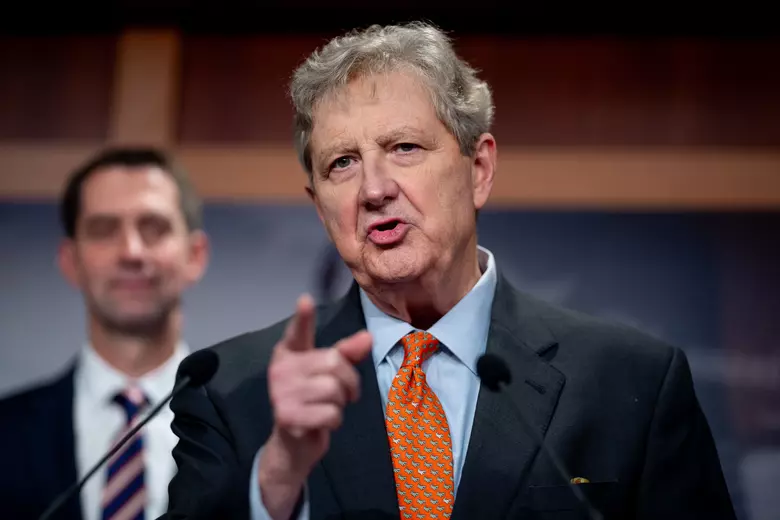
The more people replayed the video, the more they questioned whether AOC’s silence was a strategic pause or an admission of vulnerability, and whether Kennedy’s maneuver represented transparency or political opportunism.
Within an hour, the clip exploded across every platform, earning millions of views as influencers, pundits, and ordinary citizens fought bitterly over whether AOC had been cornered or merely confronted by the echoes of her own rhetoric.
Some argued Kennedy had crossed a line by using past tweets to ambush a colleague, while others countered that public statements remain fair game, especially when accusations of silencing and intimidation enter the national dialogue.
The debate grew even louder as attorneys, campaign strategists, and digital archivists began dissecting the tweets themselves, questioning which ones were sincere, which were impulsive, and which had been strategically forgotten until today.
Meanwhile, AOC’s team scrambled behind the scenes, reportedly holding emergency meetings to decide whether she should issue a formal response, ignore the firestorm, or counterattack with her own curated archive of Kennedy moments.
But the longer she remained silent, the more her silence became a narrative in itself, prompting hashtags demanding commentary and counter-hashtags urging her to “say nothing and let the moment burn out naturally.”
Kennedy, for his part, slipped quietly out of the building after the hearing, declining interviews and offering no follow-up, leaving the country to interpret his actions without additional context or emotional framing.
Political analysts speculated that his silence was intentional, a calculated refusal to overshadow the impact of the reading, allowing the public imagination to expand the moment into something larger and more symbolic.
By nightfall, every major network hosted heated panels debating whether the hearing represented a collapse of decorum, a victory for transparency, or a turning point revealing a deeper cultural war over speech and political accountability.
The conflict only intensified when leaked audio suggested that several lawmakers privately admitted they feared this moment might set a new precedent, one in which archived digital statements become weapons used without warning.
Across college campuses, student groups held spontaneous debates, arguing fiercely about free speech, digital permanence, political responsibility, and whether AOC’s original comment about “silencing” Kennedy was rhetoric or genuine intent.
International commentators chimed in as well, comparing the confrontation to famous parliamentary showdowns in Europe and South America where political narratives shift dramatically because one side exposes what the other hoped to keep unseen.
Some overseas journalists even suggested this moment might influence global discussions about political transparency, especially in nations where digital footprints increasingly shape elections and public trust.
As midnight approached, millions of Americans were still replaying Kennedy’s question, dissecting its meaning, speculating about its implications, and arguing over whether AOC would respond publicly or retreat strategically into silence.

But the truth was simpler and far more cinematic: a single stack of printer paper had transformed a routine hearing into a national drama that blurred the line between democracy, fear, rhetoric, and accountability.
And in that blur, Americans found themselves forced to confront a question that refused to fade:
When a politician says someone “needs to be silenced,” do they mean censorship, strategy, or fear of the truths that might emerge when everything is finally read aloud?