
At 5:13 a.m. on November 22, 2025, the state of Louisiana stopped.
Routine evaporated. Conversations died mid-sentence. Phones buzzed, then fell silent. In homes from Shreveport to Grand Isle, people stared at their screens, absorbing a headline that felt like a punch to the ribs:
Preston Kennedy, 43 — the only son of U.S. Senator John Neely Kennedy — has been diagnosed with Stage IV pancreatic cancer.
What began as a quiet, humid morning dissolved instantly into a statewide vigil. But it wasn’t the diagnosis alone that froze America. It was what happened moments later:
A microphone, left live by accident. A whisper, cracked open by grief.
“Lord… please don’t take my boy.”
Five words — soft, private, devastating — broadcast to the world.
Within minutes, the clip ricocheted across the internet. Hashtags ignited. Prayer circles formed. And Louisiana — a state that has weathered hurricanes, floods, political storms, and generational hardship — united around a family suddenly thrust into the darkest chapter of its life.
This is the story of that moment, the medical battle unfolding behind closed doors, and the extraordinary mobilization that has turned a private crisis into a national reckoning with faith, fear, and the fragile architecture of the American family.
I. The Diagnosis That Hit Like Thunder
According to sources close to the family, the ordeal began 48 hours before the public announcement. Preston Kennedy — a Baton Rouge attorney known for his disciplined routine — had collapsed mid-jog in the city’s historic Garden District. What initially appeared to be dehydration quickly spiraled into something far more alarming when ER physicians ordered a precautionary CT scan.
The images revealed a small but concerning mass on the pancreas — the very type that oncologists dread. A series of expedited tests confirmed the worst:
Stage IV pancreatic adenocarcinoma, with metastases to the liver and lungs.
He was immediately transferred to MD Anderson Cancer Center in Houston, home to some of the world’s most advanced oncology teams. There, specialists assembled a rapid-deployment treatment plan — chemotherapy paired with cutting-edge immunotherapy, designed not to cure, but to fight for time.
Medical experts contacted for this report were unanimous about the gravity:
Stage IV pancreatic cancer remains one of the most lethal diagnoses in modern medicine.
Fewer than 5% of patients survive beyond five years.
Even early-stage detection offers limited options.
But Preston is not a statistic — not to his family, not to Louisiana, and not to the millions who saw the senator’s anguish. And as several MD Anderson physicians noted, responses to treatment vary dramatically, especially when patients are young, fit, and surrounded by strong emotional scaffolding.
Preston checks every box.
II. The Moment the Mic Caught a Father Breaking
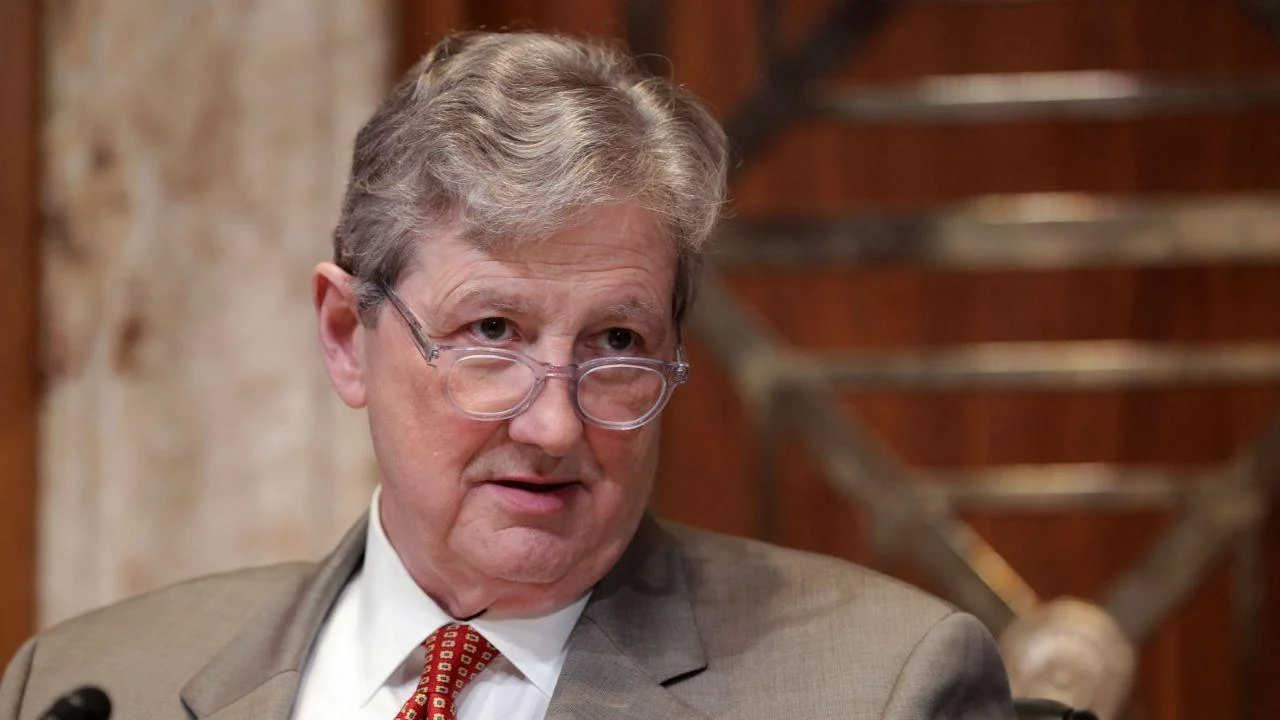
Senator John Kennedy’s public persona is famously unflappable — a master of dry humor, political zingers, and unpredictable one-liners that routinely dominate news cycles. But in Houston, all of that fell away.
Shortly before dawn, after sitting through a long night of consultations, he stepped away from the oncology wing to address a cluster of staffers and close colleagues. Believing the room’s audio feed had been shut off, he lowered his head and whispered the plea no parent ever wants to voice:
“Lord… please don’t take my boy.”
A staffer gasped. Someone reached for the mic switch. Too late.
Within an hour, the clip was everywhere — TikTok, X, Facebook, cable news.
Americans are used to seeing political figures polished, armored, and insulated.
But this was something else entirely:
A father.
Stripped bare.
Asking heaven for mercy.
Political commentator Marc Ellis described the moment succinctly:
“It was the first time in a long time we remembered John Kennedy isn’t just a senator — he’s someone’s dad.”
III. A State Responds: Faith as Infrastructure
If Louisiana has a backbone, it’s built from faith. Churches here aren’t just institutions; they’re anchors — woven into culture, community, and identity. So when Preston’s diagnosis became public, the response was instant and deeply spiritual.
Within hours:
Church doors across all 64 parishes opened for spontaneous prayer services.
Blue ribbons — the color of pancreatic cancer awareness — appeared on porches, mailboxes, and school fences.
LSU illuminated its clock tower in blue as a show of solidarity.
Pastors rewrote their Sunday sermons.
Catholic dioceses organized rosaries for “a son of Louisiana.”
Football teams, cheer squads, even marching bands kneeled together in prayer.
“You could feel the grief in the air,” said Father André Dumas of St. Martinville. “But you could also feel the unity. Louisiana knows how to fight for its own.”
Governor Jeff Landry ordered flags flown at half-staff — an unprecedented gesture for a private citizen. His explanation was simple:
“When a family hurts, Louisiana hurts.”
IV. The Kennedy Family: A Legacy Under Siege
To understand why the news hit so hard, one must understand the Kennedy family’s place in Louisiana’s cultural fabric.
John Neely Kennedy: The Public Servant with a Private Core
Born in Mississippi, raised in Louisiana, educated at Vanderbilt, Oxford, and the University of Virginia, Senator Kennedy has built a career spanning decades. His sharp rhetoric and wit have made him one of Washington’s most distinctive voices.
But friends insist his defining identity has always been fatherhood.
“John glows when he talks about Preston,” said a longtime staffer. “If you want to see his guard drop, ask him about his son.”
Rebecca Kennedy: The Quiet Force
Rebecca — an accomplished attorney known for her efficiency, grace, and community work — is described as “the steel in the family spine.” Colleagues say she delivered the family’s public statement herself, through tears but with resolve.
Preston Kennedy: The Son People Admire Instantly
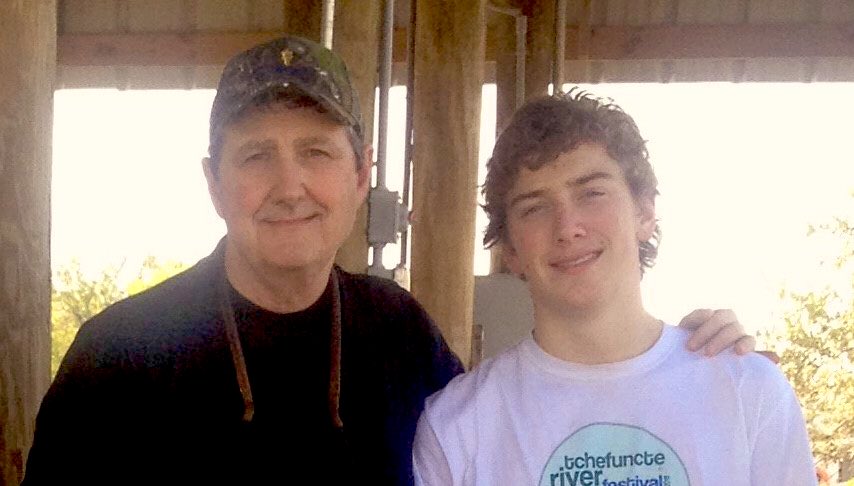
Preston built a respected civil litigation practice, earned accolades for pro bono work, coached his children’s teams, and regularly organized neighborhood service projects. Friends describe him as deeply faithful, endlessly curious, and quietly magnetic.
His three children — twin boys and a toddler daughter — are too young to fully understand, but old enough to sense that life has changed.
V. Inside MD Anderson: The Plan, The Odds, The Fight
While the country rallies, the real battle is being waged inside a specialized ward at MD Anderson, where an elite oncology team has taken on Preston’s case.
The Treatment Strategy
According to medical sources familiar with the case, the approach includes:
Combination chemotherapy using a high-intensity regimen.
Targeted immunotherapy, selected from emerging treatments showing promise in slowing metastasis.
Pain management and nutritional support, critical in pancreatic oncology.
Genomic analysis to identify mutations that might respond to personalized therapy.
Doctors have reportedly told the family there are “glimmers of response” — enough to justify aggressive continuation.
What Experts Say
Several oncologists interviewed for this story emphasized that while Stage IV pancreatic cancer is often terminal, individual cases can defy expectations, especially when:
patients are relatively young,
disease biology allows treatment response,
and emotional support networks are strong.
“Hope is not foolish,” said Dr. Lila Rashad, a pancreatic cancer specialist in New York. “It’s fuel.”
VI. Washington Pauses: Politics Takes a Back Seat
Perhaps the most striking ripple effect occurred in Washington, D.C., where political warfare is usually constant. In the wake of the news:
Louisiana’s congressional delegation halted all planned events.
Members from both parties privately reached out.
Committees delayed hearings involving Senator Kennedy.
President Donald Trump phoned personally to offer assistance and resources.
“This isn’t political,” one senior aide said. “This is human.”
Even rivals — often quick to spar with Kennedy on policy — issued statements of solidarity.
VII. A Human Story in a Hardened World
Beyond the politics, beyond the statistics, this moment has forced the country to confront something more universal: the fragility of life and the power of community response.
For a state that has repeatedly proven its resilience — through Katrina, through economic downturns, through countless challenges — the crisis has become a reminder of what binds people together.
Art galleries are auctioning paintings to raise funds for pancreatic research.
Crawfish farmers have organized benefit boils.
Schools are writing thousands of letters to the Kennedy children.
And in living rooms across the state, families are layering their own experiences of loss, fear, and faith onto the story.
“This isn’t just about Preston,” said one Baton Rouge resident. “It’s about every family that’s ever gotten that phone call.”
VIII. The Senator at His Son’s Bedside
Senator Kennedy has canceled all committee appearances indefinitely. Staff report that he rarely leaves the hospital except to shower or return calls. He reads aloud from Scripture at night, tells childhood stories, and cracks jokes when the room grows too heavy.
“I can’t do much,” he reportedly told a colleague. “But I can sit here. I can pray. I can love my boy. And that’s what I’m going to do.”
It is an image that has resonated across the nation:
A powerful man brought to his knees, leaning on faith, fighting the one battle no title can influence.
IX. What Comes Next
As Thanksgiving approaches, the Kennedy home will not host its usual gathering. There will be no large feast, no lively conversation. But there will be something far more important:
Hope.
Determination.
And a state praying for a miracle.
The road ahead will be uneven — a cycle of good days and brutal days, optimism and fear. But the family is committed to fighting every inch of the way, and Louisiana is committed to fighting with them.
X. A Moment That Defined a State — And a Nation
In the end, the viral clip wasn’t about politics or public image. It was a simple, devastating truth:
Even senators break.
Even fathers beg.
Even the strongest families need the world to stand still with them.
And for one rare moment — across divides, across ideologies, across the noise — America did.
Hope is not cancelled.
Miracles remain in season.
And Louisiana is holding the line for one of its own.